Camber Profiles: Camber vs Rocker vs Flat vs Hybrids

CAMBER PROFILES EXPLAINED
It’s important to understand there is no best camber profile. Each different profile provides various advantages, disadvantages, and riding characteristics. It really depends on the riding conditions and your particular riding style as to what suits you best. Maybe you’re after stability and carving performance, maybe you want a loose park board for learning new tricks, maybe you want a versatile ride - there’s countless options.
The following article will provide you with the basic characteristics of each camber profile. It’s important to understand how they all work and how they ride.
I want to open up this article for discussion. Please feel free to ask questions and I will be happy to help you.
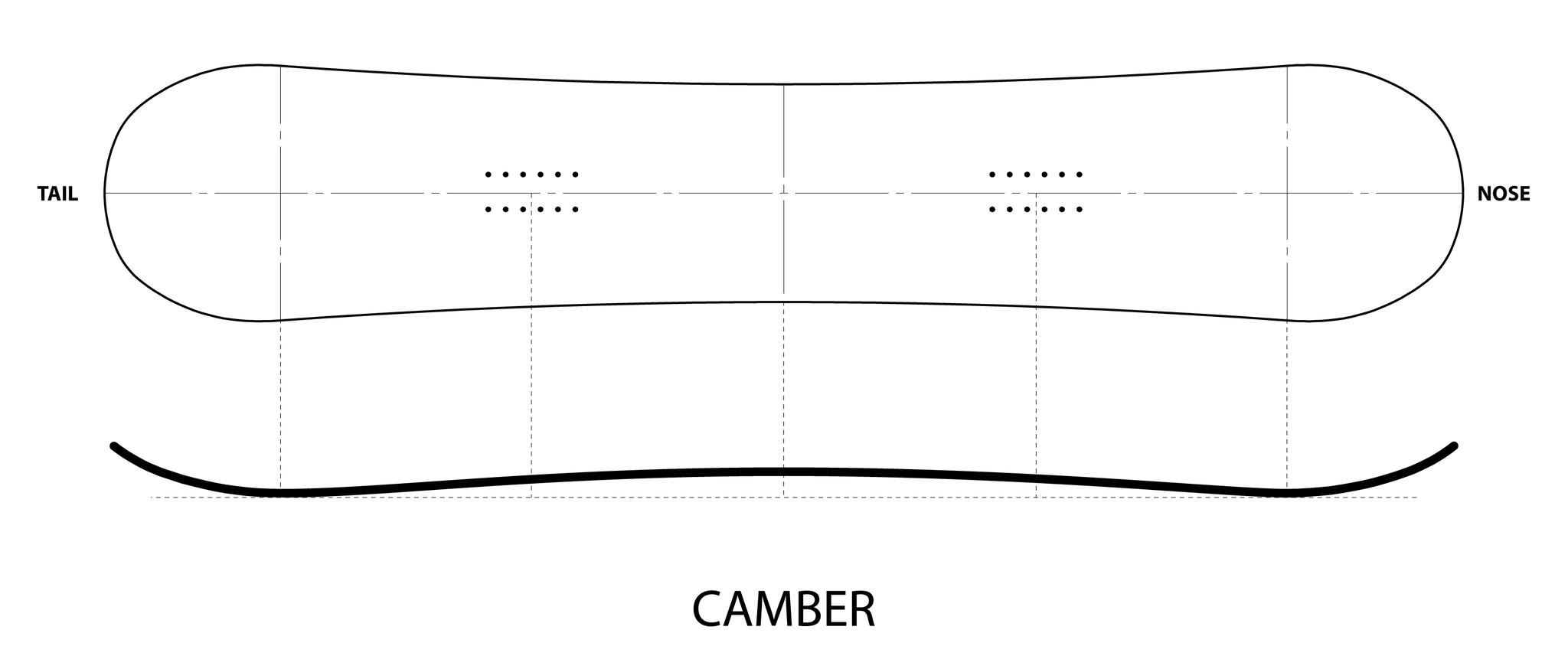
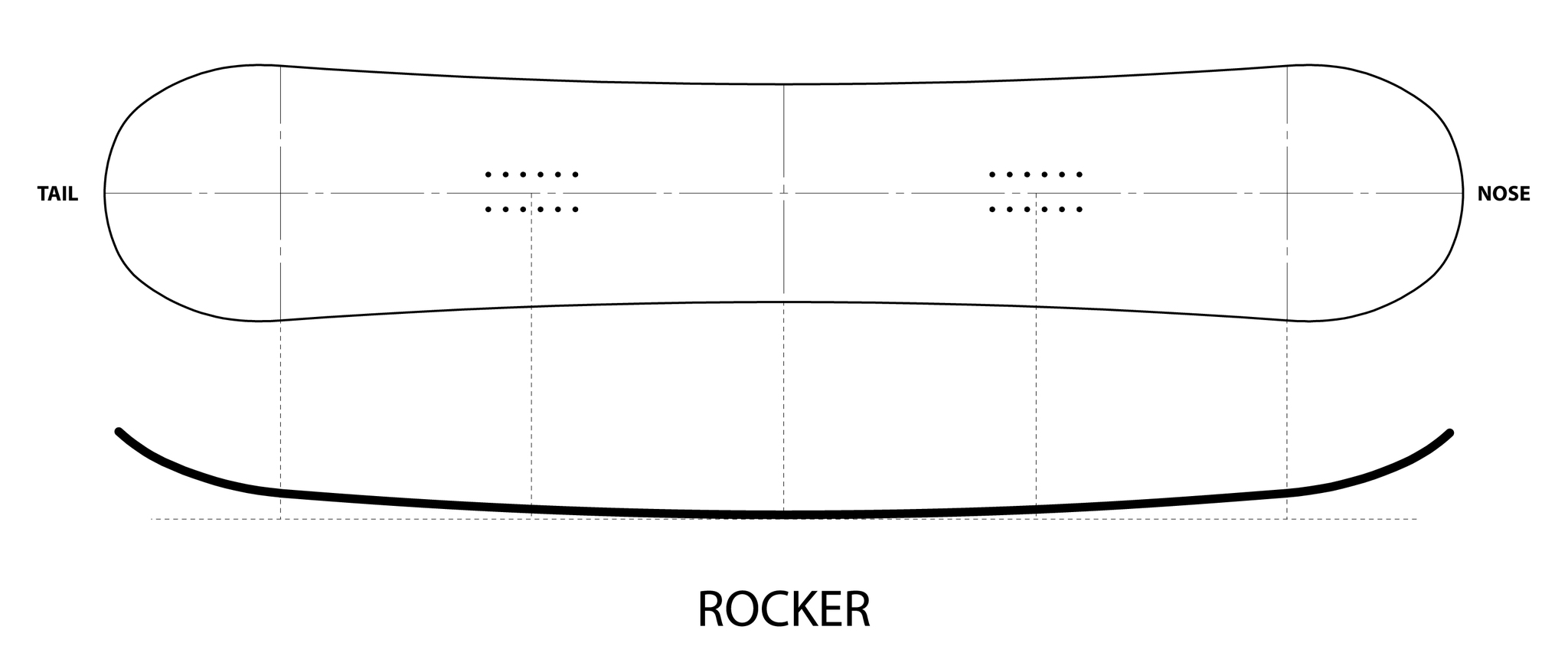
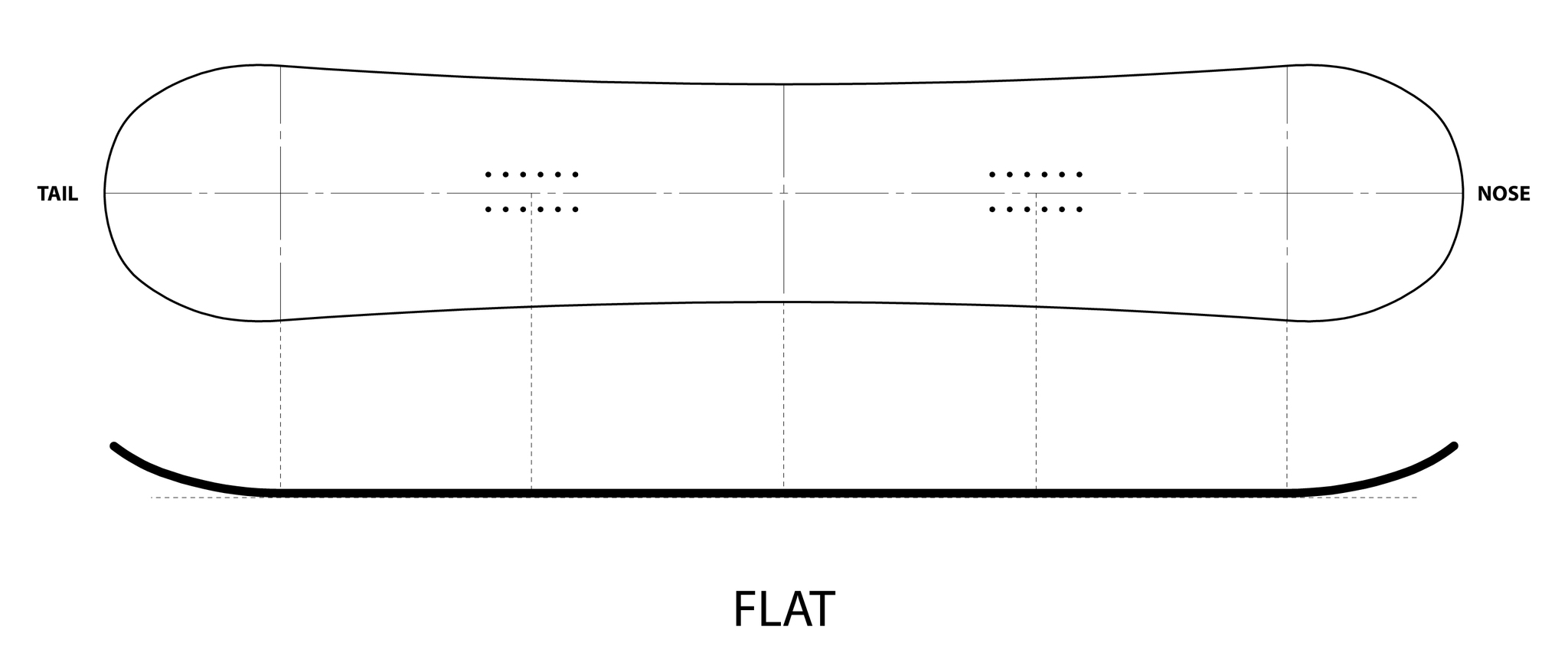
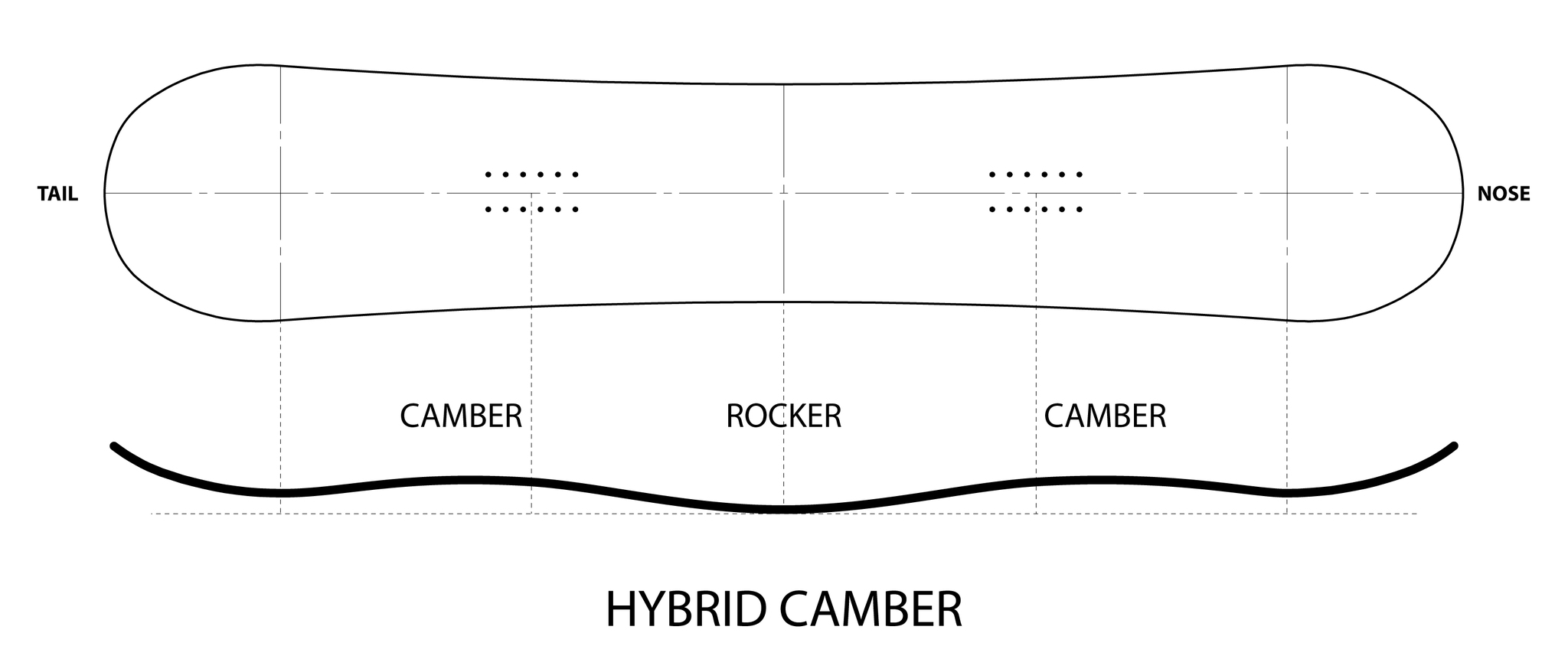
Please note: most of these diagrams have been exaggerated somewhat to illustrate a point. In reality, the camber and rocker sections might be to a lesser degree or in a slightly different area of the board. The illustrations only portray the basic profile.
CAMBER
Camber is the most tried and tested camber profile. Until a few years ago, nearly all boards were camber. Camber provides stability, edging performance, energy, and pop.
Advantages: Stable at speeds, great for carving, more pop, lots of energy (rebound) out of turns.
Disadvantages: Less forgiving, more ‘catchy’ when compared to other profiles, requires more effort to turn.
ROCKER
Rocker — also referred to as “reverse camber” — loosens the snowboard, giving it a “skatey” feel. The first thing you will notice is they are much easier and quicker to turn. They are easier to press than cambered boards — good for learning flatground tricks. Another huge advantage is how well they float in powder.
Advantages: Easy turning, easy to press, forgiving (less ‘catchy’), floats well in powder.
Disadvantages: Less stable, less pop, reduced edging performance, washes out easier.
FLAT
Flat — also known as “zero camber” — is the middle ground between camber and rocker. Combining the benefits of both, flat camber is a versatile option and often used in park boards. They are super stable for riding rails, due to the flat section between the bindings.
Advantages: Versatile, excellent for rails.
Disadvantages: Some riders say flat camber has a ‘dead’ and/or ‘damp’ feeling. It’s not quite camber and not quite rocker — so you’re missing out on the advantages of the other profiles.
HYBRID (TYPE A)
The hybrid camber profile seen below features rocker between the feet and camber under the feet. Many snowboard companies use this profile under various names, including Burton’s Flying V, Lib Tech’s C2 Banana, and many others. The benefit of this profile is versatility; it provides ‘looseness’ due to rocker between the feet and float in powder for the same reason. While camber under the feet gives edge hold and some degree of stability and pop, however not as much a full cambered board. Generally, this profile feels more like a rocker than camber.
Advantages: Versatile, loose feel and easy turning, floats well in powder, provides better edge hold and pop than full rocker.
Disadvantages: Can feel unstable on rails, not as stable at speeds as camber or CamRock.
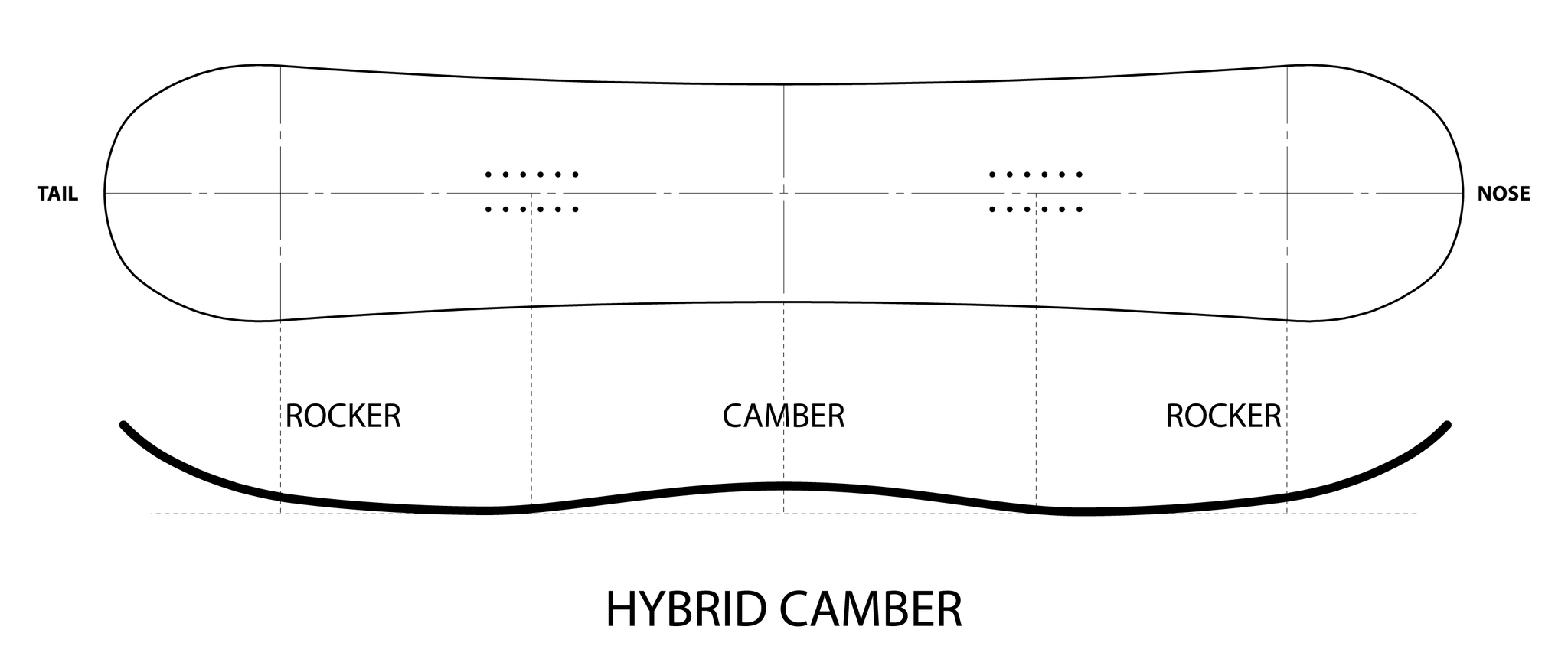
HYBRID (TYPE B)
The hybrid camber profile seen below features camber between the feet and rocker at the nose and tail of the board — referred to as “CamRock” (YES. Snowboards). The benefit of CamRock is high performance versatility; it provides stability, edge hold, and pop. Rocker at the nose and tail enables quicker and easier turn initiation. The rocker makes it easier to press, and also provides additional float in powder. Generally, this profile feels more like a cambered board than a rockered board, while maintaining many of the benefits of rocker.
Advantages: Stability, edging performance, versatility, while maintaining many benefits of rocker.
Disadvantages: Can feel slightly ‘washy’ at the nose and tail compared to camber.
POWDER / S ROCKER
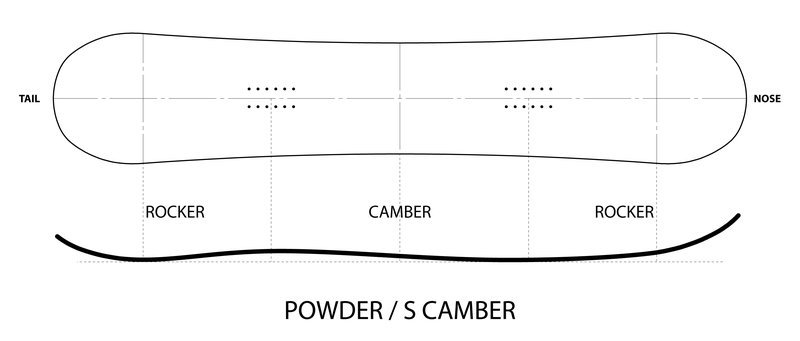
“Powder Rocker” or “S Rocker’” is often seen in dedicated freeride and powder boards. Most the boards utilising this camber profile have a setback stance, with the rider’s stance being somewhat centred over the camber section at the back of the board. This provides stability underfoot, while the significant rockered nose provides excellent float in powder and quick turning (think tight powder lines through trees). As the rider exerts force through the board, the camber section flattens, causing the nose to lift up even further for increased float in powder. Generally, this camber profile doesn’t ride switch very well due to the directional nature.
Advantages: Specialist powder profile for excellent performance in powder.
Disadvantages: Not versatile, doesn’t ride switch well.

Sweet article!!!!!
Might wanna include alternative names that some people/companies call rocker?????
ie Reverse Camber, Negative Camber etc
Good idea. Cheers mate.

how about flat with rockered tips? aka dirt rocker (smokin)

That is an awesome article Jez. You must have spent alot of time on that.
It’s really well written just the way it is, but u could also add disadvantages to the profiles… Although if u do, people might start getting a little bit  when they read something bad about their favorite camber.
Oh man, every comment on here so far is telling u to add something. Scratch mine, it’s awesome as is.

nice write up the ony thing i can suggest which will help people learning the profiles is that you have advantages but no disadvantages… for eg camber boards easy to catch edges.. rocker less pop etc….. and ya forgot TBT man!!!
*edit didnt see Andys post scrolled past it but mines the same as his… but with TBT!!!
Thanks guys. It’s all good, no need to hold back your suggestions.
I had those diagrams drawn up just for this article. Thanks to George Cant from Design Cartel for his help with that. He’s super busy so it might be hard getting additional diagrams, however the diagrams up there were meant to represent the most common configurations.
I’m going to write up another paragraph at the start, better explaining the differences and acknowledging the other camber configurations, i.e. flat middle, rocker tip and tail.
I originally had disadvantages in there but took it out for now. I felt as though I was already repeating what I wrote in the paragraphs above. However they probably should be added.
With TBT, can we really call that a camber profile? I feel that’s a whole different area. Maybe another article even. Thoughts?

I think TBT is another camber profile. Don’t think you need another article. And I agree with gamblor, you may want to add the flat to rocker profile  .
.
I’ve actually hit the 6000 character limit on the article haha. I’ve acknowledged flat to rocker in the top paragraphs and I’ll be happy to discuss it here if anyone has questions.
TBT changes the shape/profile of the base, not the camber profile of the core. Thoughts?

TBT is a type of hybrid camber and specific to Bataleon and Lobster boards (don’t know any others that use TBT)
therefore if you want information on this
best just goto the website
http://www.bataleon.com/Page-SHAPES_34.aspx
pretty much explains it in detail…only thing is to take it with a grain of salt as it is marketing to boast its benefits over other boards

TBT changes the shape/profile of the base, not the camber profile of the core. Thoughts?
Agreed - they still maintain a regular camber/rocker profile.
More into on TBT in this video:
I’ve always wanted to try a TBT board. I think it’s a great idea but I have no idea if it would work in real life. Very keen to try though.
if you like very loose feel riding its awesome…. i think it would be beneficial more park riding then all mountain but then again i havnt been on a all mountain/freeride bataleon…. my airobic is kick arse i love it but not everyone likes the ride
I’ve demoed it last spring. Didn’t like it felt weird, maybe need a couple of days to get used to.